Because I’ve been silenced.
Because I chose silence.
Because philosophy itself was born in the quiet places of the human heart.
Because silence is the place where logic yields to longing and questions breathe.
Although the nickname “Silent Philosopher” has been attributed to the second-century philosopher Secundus—who, before taking a vow of silence, believed all women were whores—this is what inspired the name of this blog: The Silent Philosopher. Why?
Let’s get into it.
For this blog, The Silent Philosopher is the silent voice of wisdom within—the one who watches thoughts and becomes pure awareness when we retreat into our “inner closet” and shut the door to the world, the thoughts and five senses of so-called “reality.”
Here we meet Sophia, the Holy Spirit, Asherah, Shekinah, and Inanna—the ancient goddesses who have been given many names throughout history, yet always blasphemed in the end.
She, wisdom, teaches us to “know thyself,” to “be still,” to see the essence of who we truly are, like the seed that can only blossom in the quiet darkness of the soil, or the zygote, fetus, and baby in the womb.
Without labels of name, gender, or life experience, it simply is. The zygote and fetus have no five senses to feel, see, hear, smell, or taste, it simply is.
Even later, when those senses develop, it doesn’t cling to or define itself by fleeting human passions; instead, it uses a sixth sense to simply “know” it exists.
Yet it is not through the five senses that the fetus knows it is connected to something greater, because it has none.
Even late in the womb, it lacks life experience to think—only the sixth sense beyond name and form allows it to “know” its connection to something ineffable: the spirit of the mother.
By the end of the 40 weeks, it knows she nourishes it. It hears her voice but does not understand the words—only a knowing beyond word and form that whispers, “I love you.”
This brings us to the second layer of meaning behind the name of this blog, The Silent Philosopher: the lost feminine voice of philosophy.
Throughout history, it seems women have been seen as incapable of contemplating deeper truths, relying instead on men for “their wisdom and instruction.”
Men, not knowing through experience what it is to be a woman, believed women didn’t think this deeply—that we were merely objects created for the material world and for men.
So throughout history, men have instructed women, not for women’s happiness, but to serve their own interests, to maintain their power, and serve themselves for their happiness.
However, women have always deeply felt this connection to wisdom, perhaps even more so than men. Although I can’t say that for certain, because I am not a man.
Yet I do know this: without women, men would have no dialogue or written language to express these deeper truths, no way to communicate their laws and ideas. Why? Think about it…
Let’s travel back to the days when humans were hunter-gatherers, better known as “cavemen.”
Men only knew love from their mothers. But their animalistic desires pushed them to hunt, to kill, to seek power over other men who threatened their access to feed their sexual desires, through women.
Through brute strength, they claimed women as their own. But why? It wasn’t just to quench sexual desire—though that was a powerful force—but to protect something they couldn’t feel without women: love, which gave them a sense of wisdom.
Yet their physical needs made them weak. If they didn’t connect to women beyond the physical, animalistic need, they felt powerless, and women were blamed forevermore for their weakness.
Still, it was through women that men learned to love, which led to a deeper seeking of truth.
Young women, too, have sexual desire, but it goes much deeper… something men can never truly understand. It binds the two into one.
Yet throughout history, men have worked extremely hard to separate that feminine connection from themselves and from each other, claiming a hierarchy over women, and there lies the problem.
But let’s dive even deeper into why men have this paradoxical relationship with women.
It was women who taught men to communicate, to engage in dialogue, and it was women who preserved these deeper thoughts and conversations through writing. Think about it… Men, for the most part—although there’s evidence that women hunted too—were the hunters, not with guns but with arrows and stones. Their days were filled with silence, focused on being as quiet as possible, like the silent footsteps of the Native American.
Meanwhile, back at the home front, women were busy gathering vital nutrients—vitamins and minerals—from roots and berries found in the Earth. But they had another important responsibility while picking and rooting: motherhood.
They had to warn, teach, nurture, protect, and love their young. So they developed ways to communicate through words—to warn of poisonous berries, hot fire, or dangerous animals; to teach which roots and berries were safe to eat; and to answer the deeper questions children ask at the “Why, Mommy” stage.
And so it is that the first philosophers, mothers, were created.
Just as the caveman used brute force and physical power to protect his woman and child, it was the woman who protected her child and man through language, writing—perhaps with a stick in the sand—and wisdom, shielding them not only from outer dangers but from the inner dangers of thoughts and emotions.
Women have always been deep thinkers, nurturers, protectors, and humble lovers. Yet the male ego is more powerful in the physical world. As men began to see women as more powerful than themselves in many ways—beyond brute strength, in the realms of spirit and intellect—they couldn’t stand for it. It made them feel weak in ways no physical strength could overcome.
Just as water is soft and flowing, yet powerful enough to erode rock in time, the feminine threatened to dissolve the structures they built. And so their egos took over. They wanted all the power, not just physical, but spiritual and intellectual too. Even though deep down, they knew she was the ultimate power within.
So they took her skills of rooting and picking and turned them into farms.
They took her intrinsic skills of language, dialogue, and writing, and claimed them as their own, creating gods shaped in their masculine image, rather than working together in wisdom and unity, or giving her the credit she was due.
Instead, he took it all—for centuries—and turned her into an object of his making, in service to himself.
Imagine what the world would be like today if we had never created a hierarchy between men and women—especially within the family unit—separating them into roles of leader and servant. We wouldn’t have needed a feminist movement if only he had acknowledged her true worth as wise and intellectual, rather than reducing her to child-bearer and sexual object.
Money was used as a tool against women—a way to own her—because she was not allowed, through brute strength, to enter the male-dominated world, except, as Secundus so “eloquently” stated, in the case of the whore.
If men had truly valued both the domestic work women undertook and the wisdom they had to offer the world, our family unit would likely still be intact. Instead, men made families into businesses. He was the owner—the one who “earned” the money, the food, the sustenance—and so she owed him everything. She became his slave.
But if the world had honored women’s desire to share their wisdom and still care for their families, we could have created meaningful jobs that allowed balance. Women could have contributed both income and insight, lessening the resentment of men who believed, “She doesn’t work,” and therefore owes him her life.
Instead, man used money and power to keep her dependent, silencing her, diminishing her, never acknowledging the importance of her role as wife, mother, and wisdom giver. She became an object, created to serve his happiness, and made to feel less than, physically, mentally, and spiritually.
He could not see her human needs—the desire to feel appreciated not only for her domestic contributions, but for the original wisdom he had taken from her and claimed as his own. Half the things men are credited for, the world quietly admits, came from the truth behind the old axiom: “Behind every great man stands a great woman.” She was always the voice of intelligence and intuition in the dark.
And then, after the feminist movement, instead of working with her as different but equal, he said, “Oh, you want to work, do you?” The male ego charged like a bull, making it as difficult as possible to balance work and home.
Still, she persevered.
But his refusal to see her for who she truly was—beyond mother, wife, or possession—and his belief that money defined worth eroded the family unit. He held the purse strings, controlling her every move, refusing to give her equal access to what she had helped build. Her contributions were invisible unless they increased his power.
Had man overcome his ego and valued the work she did at home—day in and day out—and the wisdom he knew in his heart she carried, we would have a very different world. One where she, too, was given her inalienable right to life, liberty, and the pursuit of happiness.
So this is where The Silent Philosopher comes from—not from the ancient Greek philosopher Secundus, who made the mistake of believing every woman was a whore.
Wasn’t it man himself who created the very concept of “whore”? He gave her no other choice but to use what little power she had to earn extra money to survive, because she wasn’t allowed to be the teacher, the doctor (both of which, I’ll explore later as inherently feminine processes, though later dismissed as “witchcraft”).
How else could she earn a living?
Man set it up so that the only thing she was allowed to sell was her ability to quench his ravenous fire, then turned around and condemned her for it.
The old paradox of evil: that she should have depended on her husband, the very man who pulled all the strings.
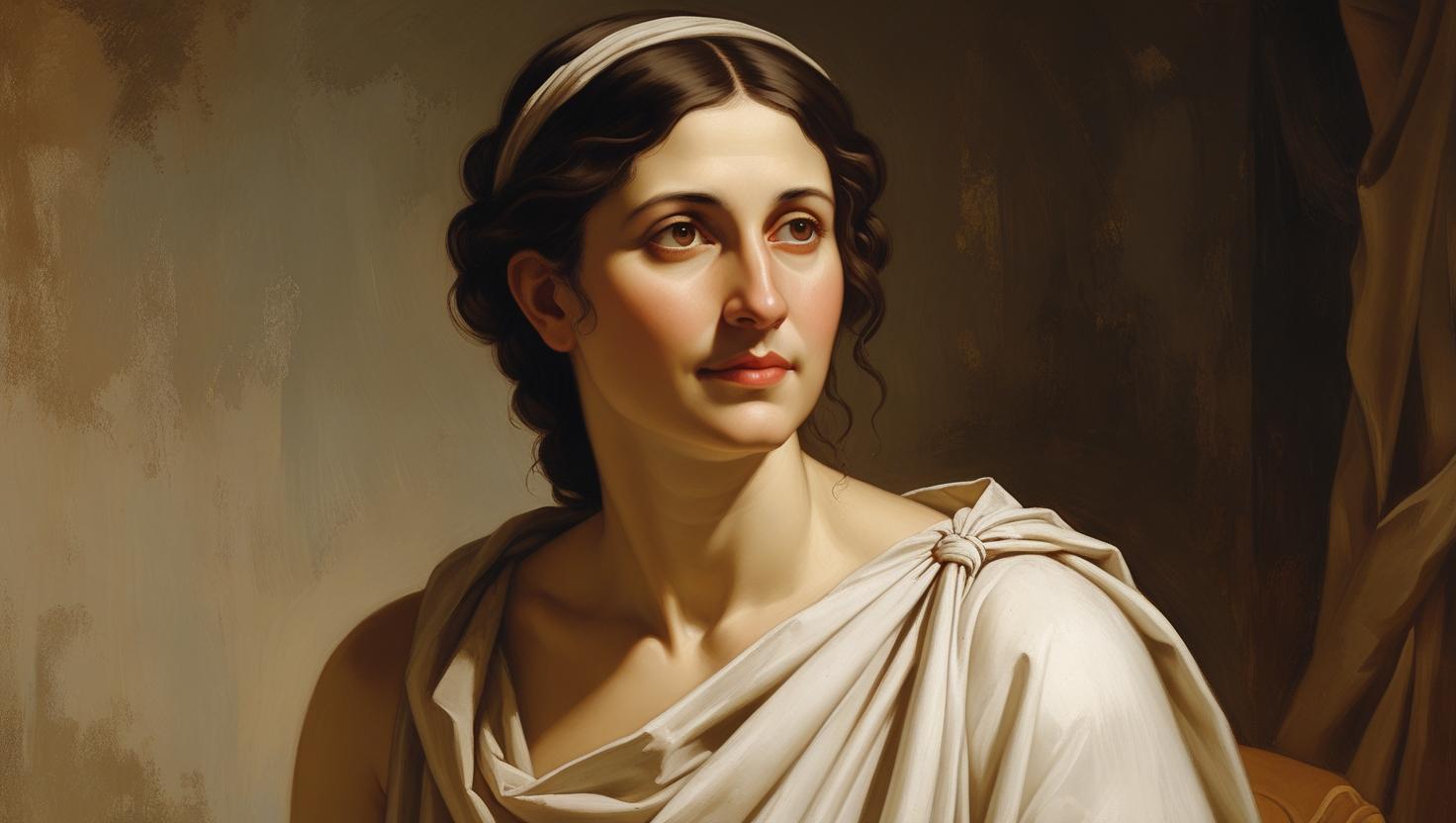
So, The Silent Philosopher is not Secundus. She is the feminine wisdom of woman—the matrix of philosophy—and her silenced voice echoing through history.
But her voice is returning. She speaks now through those of us who remember—not just with words, but with presence, with intuition, with the courage to question everything we’ve been told. The Silent Philosopher is no longer silent. She is listening, watching, gathering. And when she speaks, she speaks not to dominate, but to restore. Not to conquer, but to awaken.
Discover more from The Silent Philosopher
Subscribe to get the latest posts sent to your email.
 The Silent Philosopher