There is a quiet current running beneath the foundations of Western thought, one that doesn’t flow from Athens or Rome, but from the East.
Long before “globalism” and the internet connected cultures in milliseconds, the ideas of the East had already begun seeping into the minds of Western philosophers.
Pythagoras, for instance, was not just a mathematician; he was a mystic who studied in Egypt and perhaps even further east, and his belief in the soul’s immortality and the harmony of the cosmos echoes Vedic and Daoist ideas.
The Neoplatonists, too—Plotinus, Proclus, Hypatia, and others—taught that all things emanated from a single source, the One, not unlike the Upanishadic Brahman.
During the medieval period, Christian mystics were translating Eastern texts and quietly absorbing their metaphysics.
By the time we reach the British Romantics like Blake and Coleridge, or American Enlightenment thinkers like Jefferson and Franklin, we see a deep fascination with simplicity, balance, moral clarity, and the idea that nature itself holds the blueprint for human ethics.
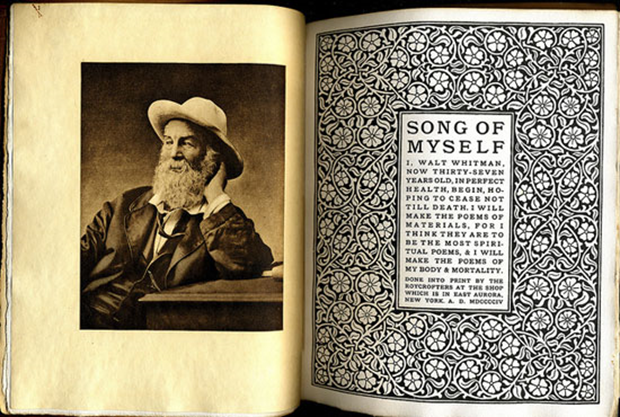
And then came American Romanticism—with voices like Emerson, Thoreau, and Whitman, who didn’t just admire the East…
They internalized it.
Emerson’s essays read like a synthesis of Vedanta and Stoicism.
Whitman’s poetry flows with the kind of cosmic inclusivity found in the Bhagavad Gita.
Thoreau’s cabin at Walden Pond may as well have been nestled on the banks of the Ganges.
On “Blended Philosophy Thursdays,” we’ll explore:
- How Eastern and Western ideas have long intersected—not as opponents, but as mirrors
- The transmission of ideas across time, language, and empire
- The blending of science and spirit, reason and intuition, logos and mythos
- How modern Western thinkers—Einstein, Alan Watts, Carl Jung, and others—built bridges between paradigms
- Why this fusion of thought is especially urgent now, in an age of both planetary crisis and technological awakening
The West taught us how to stand tall, to question, to build.
The East teaches us how to bow, to listen, to “be.”
But when we honor both lineages, we move toward something new: a philosophy that is not bound by geography but guided by truth.
Discover more from The Silent Philosopher
Subscribe to get the latest posts sent to your email.
 The Silent Philosopher