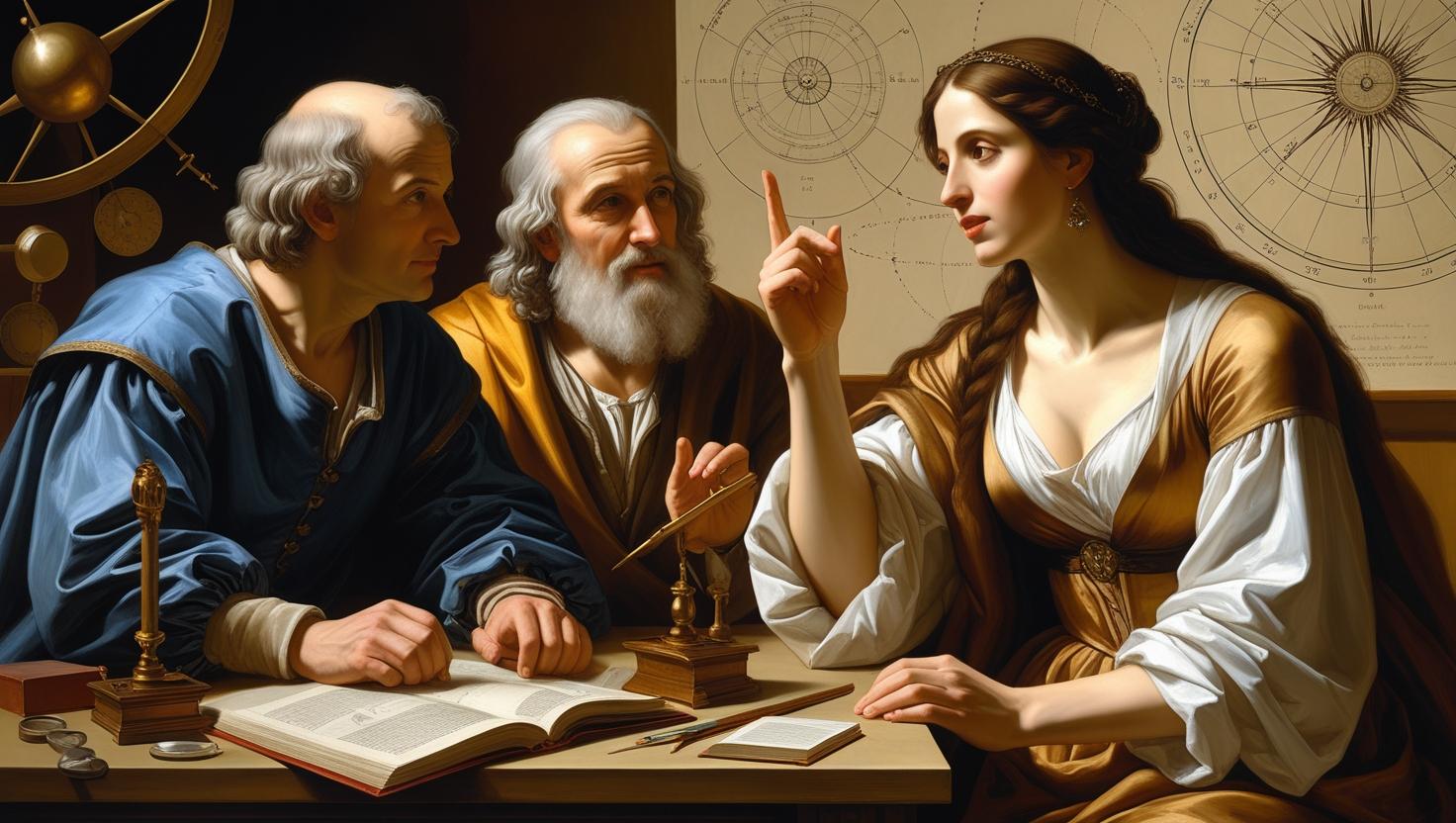
For most of recorded history, philosophy has worn a masculine mask.
We learn the names of Socrates, Plato, Aristotle, Descartes, Kant.
We quote them, study them, debate them.
But where are the women?
Too often, they were there – writing, teaching, questioning, leading – but erased, ignored, or silenced.
Others didn’t speak from lecture halls, but from temples, kitchens, and journals. They wove philosophy into life itself… into healing, into justice, into art, into family, into resistance, and into care.
Feminine Philosophy Fridays are about uncovering these voices, yes, but also about doing something more revolutionary:
Re-centering feminine ways of knowing.
I chose Fridays intentionally named for the Norse goddess Freya, a deity of love, beauty, intuition, fertility, and fierce feminine power. In many ancient traditions, Friday was seen as a sacred day for honoring the divine feminine.
So each week, we’ll honor her legacy by lifting the voices history tried to bury and reclaiming the feminine as vital to wisdom and truth.
Here, we’ll explore:
- Philosophers like Theano, Diotima, Hypatia, Julian of Norwich, Simone Weil, Hannah Arendt, Simone de Beauvoir, and the lesser-known mystics, healers, and thinkers
- Feminine modes of thought: cyclical, intuitive, relational, integrative
- How domestic wisdom—caretaking, multitasking, empathy, moral imagination—is political and philosophical
- Why modern leadership, governance, and institutions suffer without the balance of the feminine
- How philosophy must evolve beyond domination and logic to include feeling, being, and becoming
This isn’t about replacing male voices; it’s about completing the circle and balancing the scales.
It’s about questioning the very foundation of what counts as “philosophy.”
It’s about healing the rupture between head and heart, spirit and matter, thought and action.
I’ll also talk about my own experiences… grief, motherhood, love, rage, pleasure, intuition, and how these are not distractions from philosophical life but its very soil.
The feminine is not weak. It’s not secondary. It’s not less rational.
It is deep. Interconnected. Wise.
And perhaps, it’s what our broken world has been waiting for.
Discover more from The Silent Philosopher
Subscribe to get the latest posts sent to your email.
 The Silent Philosopher
One thought on “Feminine Philosophy: Unearthing the Voices, Reclaiming the Power”