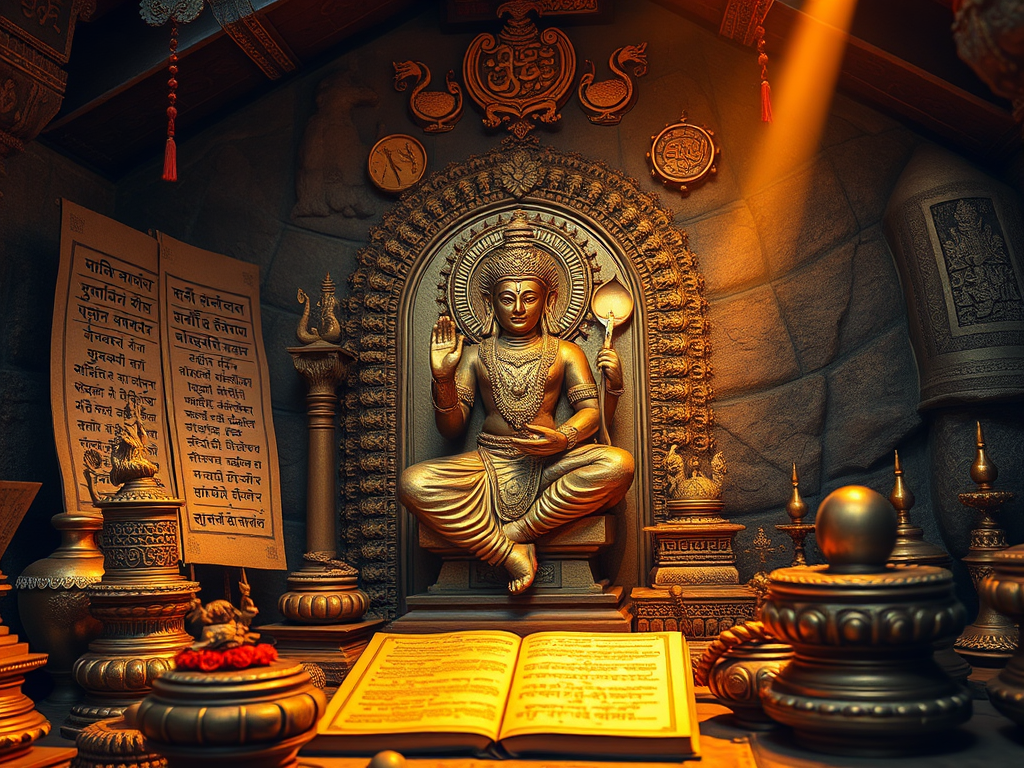
The Wisdom of Eastern Philosophy:
While Hinduism is the oldest living religion in the world, the Upanishads are more than scriptures. They’re philosophical inquiries, filled with questions rather than commandments. Much like parts of the Bible, especially the Psalms, Proverbs, and the teachings of Jesus, the Upanishads offer moral and existential truths that can be explored outside of religious frameworks.
They challenge us to look inward, to observe the nature of reality, and to live from a deeper center of awareness.
Eastern philosophy as direct experience:
Where Western philosophy often begins with doubt and logic, the Upanishads begin with direct experience… what do you feel, see, sense, and know beneath the surface of thought?
This isn’t about belief. It’s about perception and how perception is shaped by who we think we are.
As Within, So Without
One of the Upanishads’ most provocative statements is:
“As a man is, so he sees.”
(Bṛhadāraṇyaka Upanishad, 4.4.5)
It echoes a familiar line from the Book of Proverbs:
“As a man thinketh in his heart, so is he.” (Proverbs 23:7)
These two ancient texts, one from India, one from the Near East, are saying something strikingly similar: We do not see the world as it is.
We see it through the lens of who we are… our values, habits, fears, and inner clarity.
A little sidenote: In tomorrow’s post in the Blended Philosophy Series, we’ll explore one of the most profound twentieth-century books written on this subject that can be read in 45 minutes but takes years to understand…
Continuing on… This isn’t mere psychology. It’s a philosophy of the self. If we want to understand reality, we’ve got to begin by understanding ourselves.
The Upanishads teach that the source of suffering is mistaken identity.
We identify with the body, so we fear aging.
We identify with emotions, so we swing with every change.
We identify with our mind, so we live trapped in thought.
But underneath all of this is a Self that isn’t born and doesn’t die.
It’s not high or low, happy or sad. It’s simply… aware.
Atman: The Inner Flame
The Upanishads describe the Self (Atman) in poetic and paradoxical terms. It can’t be seen, but it sees all. It can’t be touched, but it animates everything.
“The Self is hidden in the heart of all beings, not larger than a thumb, shining like a flame.”
— Katha Upanishad
This “flame” is consciousness itself, pure awareness, untouched by thought or form. And it’s the same in everyone. The differences we see are external. The truth is non-dual.
Knowing the Self, they say, is liberation, not from the world, but from illusion. From the lie that you’re separate, small, or alone.
Philosophy as Practice
The Upanishads weren’t written for scholars. They were written for seekers.
They invite us to sit in silence.
To observe the breath.
To watch the mind, not to stop it, but to see through it.
When we do this, even for a few minutes, something shifts. We stop identifying with the thoughts that come and go. We sense a deeper stillness, one that was never born and will never die.
That’s the Self.
That’s the truth behind all appearances.
That’s the first teaching of the Upanishads.
Reflection Prompt
What stories or identities do I mistake for my Self?
Who am I beneath all of that?
Discover more from The Silent Philosopher
Subscribe to get the latest posts sent to your email.
 The Silent Philosopher