Philosophy in our modern world means we need to think differently
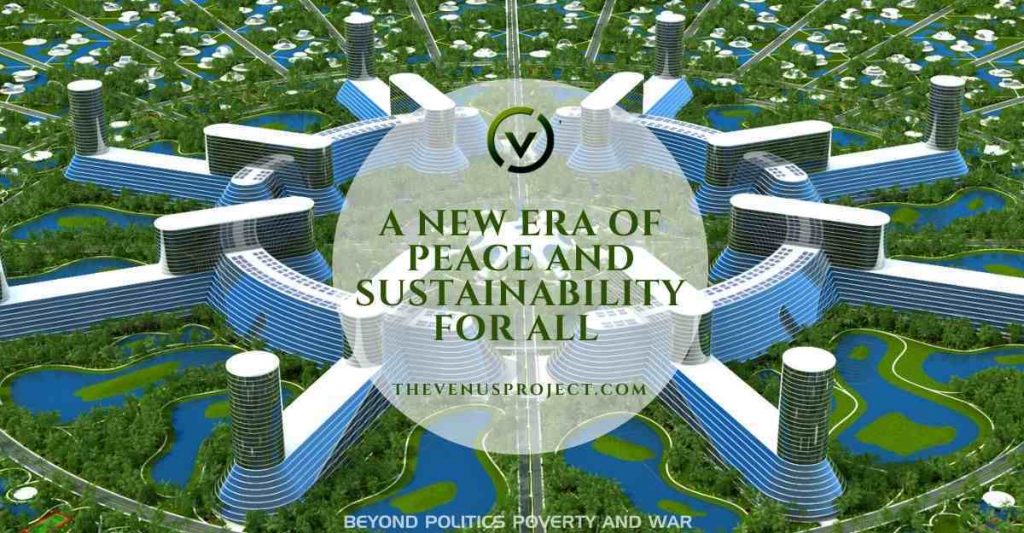
The picture above is from the late and brilliant philosopher-architect, Jack Fresco. His ideas are radical, innovative, and a hard sell to our current consumer world.
We live in an age that promises everything… knowledge, instant connections. I mean, instant everything! But most people are still working just to survive.
Why?
Why, in a world of possibility, are we continuing to operate within old systems economically, socially, and spiritually that no longer serve us?
The answer, for the most part, is simple: people don’t like change.
Jefferson tells us this in the Declaration of Independence…
“Governments are instituted among Men, deriving their just powers from the consent of the governed, –That whenever any Form of Government becomes destructive of these ends, it is the Right of the People to alter or to abolish it, and to institute new Government, laying its foundation on such principles and organizing its powers in such form, as to them shall seem most likely to effect their Safety and Happiness.
“Prudence, indeed, will dictate that Governments long established should not be changed for light and transient causes; and accordingly all experience hath shewn, that mankind are more disposed to suffer, while evils are sufferable, than to right themselves by abolishing the forms to which they are accustomed.“
In other words, Jefferson says here that when just governments are instituted, they should always get their power and consent from the People. When that doesn’t happen and they’re being abused, they need to either alter (change) it or get rid of it and create a new form of government that they, the People, believe will benefit their safety and happiness.
He then goes on to say that, of course, you can’t just go changing government like a pair of socks; it’s got to be done for a very pressing reason and good cause.
Then he goes on to say, unfortunately, historical experience has shown that people would sometimes rather suffer than make things better because people don’t want to change what they’re accustomed to. Yet the irony about that is that life is change!
And change we must!
The Illusion of Choice
Take capitalism, for instance. It’s often treated as a black and white: either you’re for it or against it.
But this kind of binary thinking is a philosophical failure, as all binary thinking is.
Capitalism, like any system, is a tool. It’s a means of organizing trade, resources, and incentives. But it’s not a moral framework. And that’s why it needs one.
Why?
Because it doesn’t care if the hungry get fed. It doesn’t reward patience, kindness, or wisdom. It rewards capital and those who have it.
What is capital, really? It’s leverage. It’s the cushion to fail. Most entrepreneurial ventures flop before they succeed. The difference between success and failure isn’t brilliance. It’s… Who can afford the fall?
Risk is a Privilege
A young woman with student loans and two kids can’t afford to “hustle” her way to success. She needs certainty: food, rent, medicine, electricity, and time to raise her children.
A man with family backing and no immediate obligations can fail five times in a row before something sticks. One is judged lazy for playing it safe; the other is called visionary for “taking risks.”
But risk, in today’s system, is a privilege paid for by generational capital. I’m not saying it’s always that way, but statistically speaking…
And so the wheel turns: those with money buy freedom, and those without it keep everything running. And that’s the problem. We, the People, keep it all running!
Yet so many will say…”Well, the 1% take all the risk.”
So? A large percentage of them can afford to…
Does that justify no progressive tax on millions, even billions, each year?
Shouldn’t some of that residual income help to pay for the broken roads and equalize healthcare?
Shouldn’t they be required to pay Social Security to keep it moving? Can you imagine how quick we could fix the system?
Lots of people take risks…working jobs, going to school, and raising kids – total burnout, hoping they’ll be able to get a decent job to live well AND pay their student loans, only to find themselves working second jobs.
Do they get tax breaks on that? Not much. But interest rates are insane!
Yet the billionaire gets millions in loans a year at the very lowest interest rates, and, remember, no tax on loans.
Great setup, isn’t it?
What AI Makes Possible
But now something new has entered the equation: artificial intelligence. With the right tools, one person can now replicate the work of a team… graphic design, marketing, coding, planning, budgeting. It’s possible to launch a business with a “team” of experts in one little artificial intelligence program.
This should be the great equalizer, right?
But what about the graphic designer, marketer, content creator, coder, business, and financial planner? What are they going to do?
Instead, the same old pattern is repeating: AI is being used to eliminate jobs, not eliminate poverty. To maximize profit, not human potential.
A Philosophical Fork in the Road
So here we are. Standing amid transformation, yet still dragging around the heavy baggage of an era that shouldn’t exist anymore.
We don’t need a revolution. We need a re-evaluation. A philosophy.
We need to ask:
- What kind of life do we believe every human being deserves?
- What is the point of technological progress if it doesn’t lead to freedom… to think, to create, to innovate, and to rest and explore?
- What is success in a world where machines can do more than most humans ever will?
The answer is not to abandon capitalism but to reshape it within a broader moral framework and ethical structure. One where:
- Basic survival is guaranteed… food, housing, health, transportation, and time.
- Risk is deleted from the equation.
- Work becomes meaningful, not just necessary.
- And AI becomes a tool for collective liberation, not a weapon for hoarding wealth.
These ideas echo The Declaration, where life, liberty, and the pursuit of happiness were once espoused by John Locke’s liberalism as inalienable rights of life, liberty, and property – our forefathers decided to change property to the pursuit of happiness, but the implied intent was there.
So the inalienable right of life includes food, health, and time. The inalienable right of liberty means freedom to move, to explore, to speak, and to freely live without worrying about survival. And, finally, the pursuit of happiness, and so housing should be included. The American dream ideal, the pursuit of happiness, means time to innovate, create, learn, think, rest, and explore.
Even Donald Trump said in The Art of the Deal, “The most important thing in life is to love what you’re doing”… “And if it can’t be fun, what’s the point?”
What is the point for most people? Survival. They don’t have the luxury to do what they love and have fun doing it.
What Should We Call It?
It’s not socialism. Not traditional capitalism. Not utopia.
It’s a resource-based Digital-Dignity Economy. The basic resources of food, housing, etc., are locally resourced and then traded between the states and capitalized through imports and exports.
A system where capital exists, but it serves the human spirit, not the other way around.
A society where people have the time and space to think.
Where freedom isn’t defined by wealth, but by possibility.
The future is here. The tools are in our hands.
But if we don’t slow down to think and ask the right questions, then AI won’t save us.
It’ll simply accelerate the inequalities we never took time to fix.
So what’s your innovative idea? Drop a comment. I’d love to hear it.
Let’s philosophize!
Discover more from The Silent Philosopher
Subscribe to get the latest posts sent to your email.
 The Silent Philosopher
The question is how?
That is the question, isn’t it? Whatever we can do… post discussions, join co-ops. It seems like a pipe dream, but even just one powerful yet moral person can create the changes we seek. Where there’s a true will, there’s a way! Any ideas?