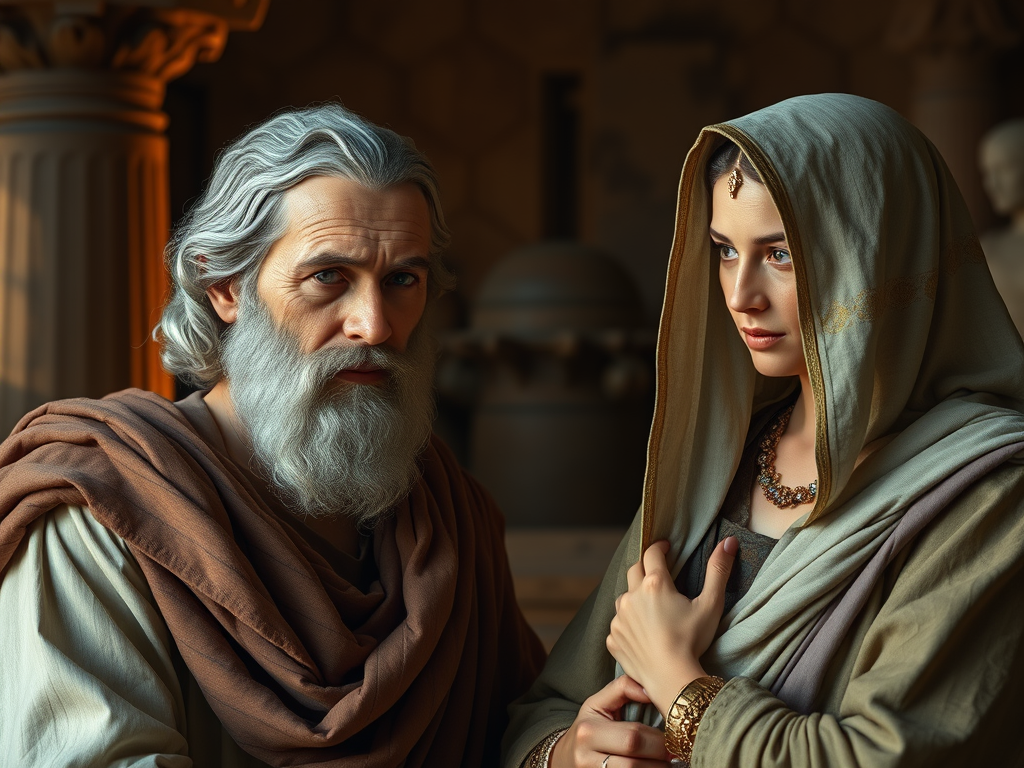
Philosophy’s Silent Rebel of Wisdom
Why is it that the progenitors of our movements never wrote a single word? Or why is it that the greatest insights came from those who didn’t sign their names?
He and the others didn’t write a word; it’s always hearsay.
He wandered barefoot through the dusty town square of Athens, asking questions, sometimes passively, and not to impress like the male ego often does, but to awaken.
His name was Socrates, or so they say. His legacy? The birth of Western philosophy.
The meaning of his name meant “safe power.” Hmm…
He simply helped people re-member what they already knew.
The Unexamined Life
Socrates’ most famous quote, recorded by Plato, is:
“The unexamined life is not worth living.”
He believed that true wisdom began with knowing thyself, not things. And knowing yourself meant more than labeling your likes and dislikes. It meant confronting your illusions, your contradictions, your assumptions, and doing it daily. Remember what happens when you ASS-U-ME…
This is where philosophy becomes a meditative practice. Socrates’ questions weren’t meant to be answered; they were meant to lead you inward.
Who am I?
What do I truly believe?
And how do I know what I know?
Contemplative Dialogue
Socrates’ real arena was the soul. His conversations, known as the Socratic Method, were less about debate and more about unraveling false certainty.
He believed:
- Truth was best approached through dialogue.
- The wisest person is the one who knows they do not know.
- Education is not about pouring in facts, but drawing out inner understanding.
The Meditative Core of Socrates
While we don’t often associate Socrates with “meditation” in the way we think of it today, his life was deeply contemplative.
In Plato’s Symposium, Socrates is said to have stood motionless for hours, lost in thought, completely still, while others partied.
Even in battle, he was known to pause and enter deep silence, as if listening to something beyond the world around him…
A very passive, unmasculine idea indeed.
He even claimed to be guided by a quiet inner voice, the Sophia within, that warned him when something was wrong. This wasn’t superstition; it was intuition. A sense that truth spoke softly – beyond the harsh voice of the ego – from within.
In this way, Socrates may be one of the first recorded Western examples of living meditation… walking, questioning, and listening not only to others, but to his own soul.
The Feminine Hidden Within
The phrase Socrates most often returned to — Know thyself — was inscribed on the Temple of Apollo at Delphi, where a priestess, the Pythia, spoke oracles in altered states. It’s no accident that Socrates’ life of inquiry mirrored the feminine mystical as much as the rational.
He was a bridge between reason and intuition, mind, and mystery.
Just as the feminine Sophia whispered behind Pythagoras,
the Delphic Oracle whispered behind Socrates.
But we only know Socrates from the writings of Plato. It may seem far-fetched, but his ideas were soft; his ways, even in war, were passive.
What if Socrates was really a woman guiding Plato into deeper truths?
Think about it… Plato defended women’s equal nature, whereas Aristotle wanted to rule over them, like so many of the fearful men of the time.
Aristotle did not meet Socrates, but Plato did. He tells us in the Republic:
“Women and men have the same nature in respect to the guardianship of the state, save insofar as the one is weaker and the other is stronger.”
“A man and a woman who have a physician’s mind (psyche) have the same nature.”
So, besides physical strength, which Socrates didn’t care about, Plato tells us that men and women are equally brilliant, wise, and able to lead.
Why it Matters
In a world addicted to rational answers, Socrates gives us better questions and guidance from within.
He left us with only the words of Plato. And like so many who came before and after, it seems that guidance was the very nature of feminine wisdom.
Would Plato have been taken seriously if they knew his teacher was a woman?
In a culture that rewards physical strength as more powerful than inner strength, like noise versus silence, he reminds us that silence is wisdom itself, even if it’s the silence that follows a question no one dares to answer.
Philosophy, at its roots, is not about arguments; it’s about awakening.
And Socrates, wandering barefoot and smiling quietly, was the first to remind us of this feminine power within.
I’d love to hear your thoughts… Let’s philosophize!
Discover more from The Silent Philosopher
Subscribe to get the latest posts sent to your email.
 The Silent Philosopher